

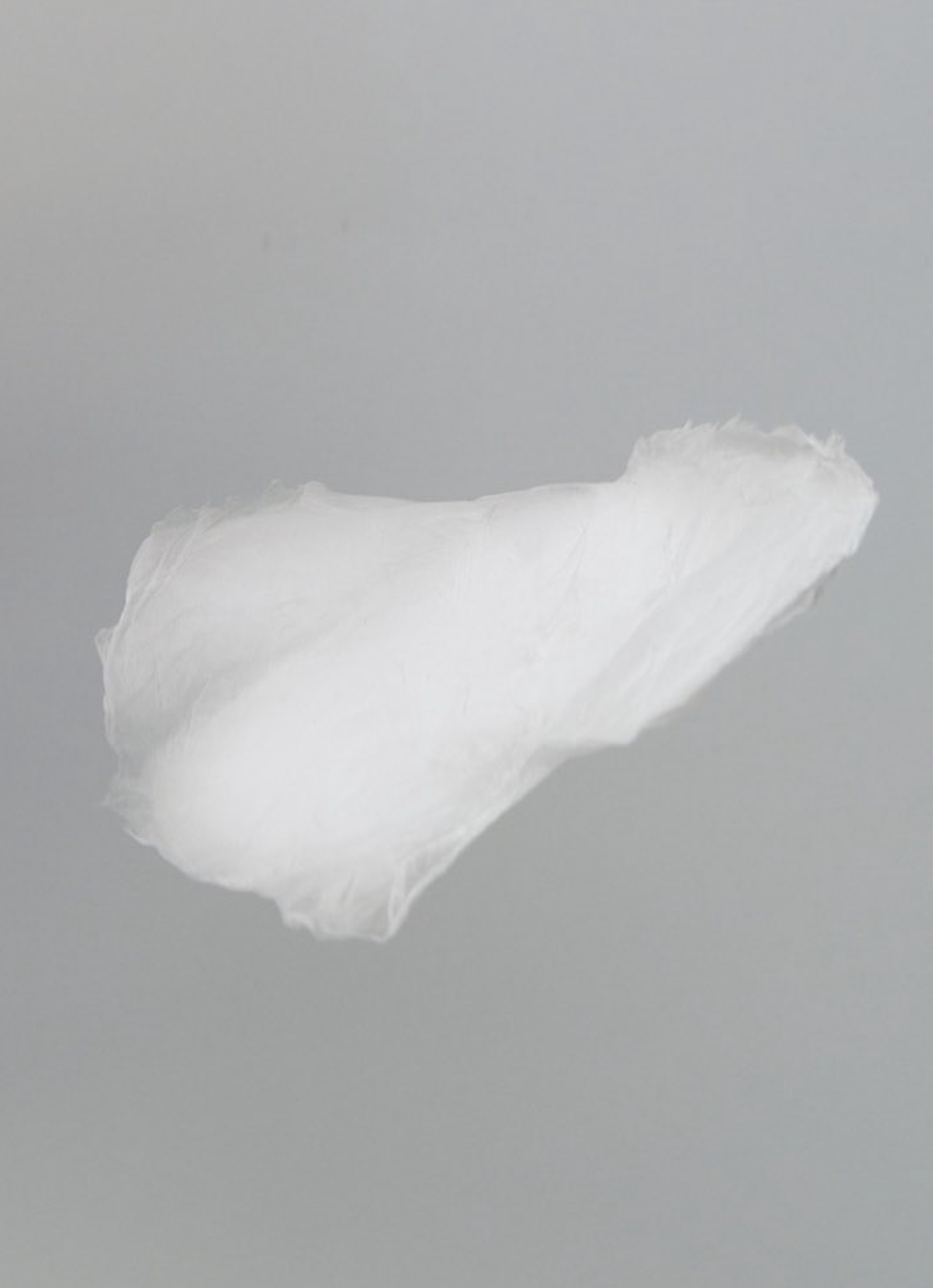
Bio-Engineered Silk
Exploring the potential of bioengineering processes to impact future notions of luxury materials that fit into a biological circular economy
The textile industry is recognised as a major pollutant, scoring lower than any other in the UK Environment Risk Assessment. The textile industry operates within a linear system where discarded materials end up in landfill or are incinerated.
The time has come to rethink the resources we use and to transition to an alternative system that delivers better economic, societal and environmental outcomes. In this sense, material innovation has picked up bio-engineering processes in the investigation of more sustainable materials.
This project employs bio-technologies to create biodegradable and lightweight non-woven nanomaterials from bio-based sources. Through this emerging nanotechnology we explore how advanced additive manufacturing and bio-engineering processes could impact future notions of luxury materials that fit into a biological circular economy and its possible applications.
Working with Abdalla M. Omar, Mohamed H. Hassan and Evangelos Daskalakis of the Additive Manufacturing and Bioengineering Group at Manchester University, we created a biodegradable, ultrathin nanofilm that offers a multitude of fascinating features. This nanofilm presents properties similar to textiles but with the ability to tune morphology, mechanics and appearance through different mixtures.
Cova Trujillo Mateos
covatruma@gmail.com